./ 2021
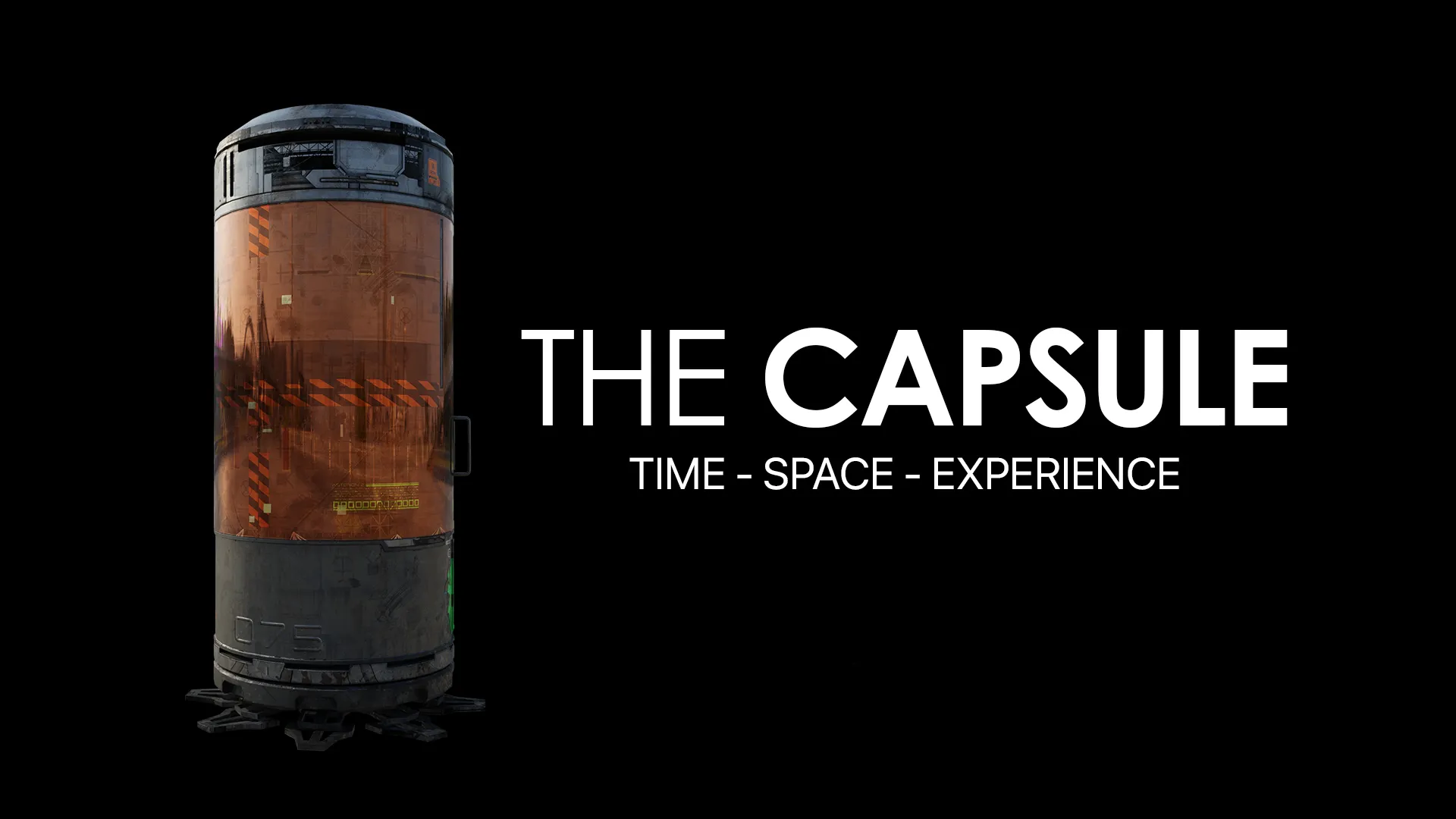
Capsule - City VR
Piccadilly Circus through time: a VR archive prototype
Details
- Tools


./ introduction
Capsule — City VR is a rough research prototype that lets users navigate Piccadilly Circus across three sample time periods using a VR headset. The prototype was developed during the two-month Media Frontiers module at the University of Westminster and was not intended as a final historical reconstruction, but rather as a learning experience and reflection on how virtual reconstruction can reveal the changing uses of an urban place rather than merely its appearance. A place is indeed not only defined by its architecture, but also acquires meaning according to the use people make of it. Conceptually, the project focuses on the layering of animations, soundscapes and interactivity so users can perceive how human activity shaped the location across eras.
The prototype offers three sample “periods” users can load and navigate using a Steam VR compatible headset and controllers:
- Present: photogrammetry-derived geometry with contemporary city sounds.
- Past (rural): reconstructed low-density scene with ambient natural sounds.
- Future (speculative): a futuristic scene created combining 3D models and samples.
This project deliberately trades archival completeness for experiential testing and technical learning; its visual and historical fidelity is intentionally provisional.
./ outcome
What should be improved
- The lack of prior technical knowledge and the short project timeline limited depth of historical research, visual fidelity, and completion.
- The prototype is visually rough and not historically complete: some photogrammetry reconstructions are partial and historical elements are generic rather than archival;
- Animated models and historically accurate crowd/traffic behaviours were not implemented, although this was the conceptual centrepiece of the project.
What worked
- Photogrammetry delivered site-specific models for the present scene that accelerated environment-building.
- Unreal Engine provided a capable VR pipeline and spatial audio tools that allowed us to quickly prototype immersive scenes